India’s Climate and Roads Demand Health-Based Fleet Maintenance
There is a version of predictive maintenance that works well in Germany, works reasonably well in the United States, and needs to be fundamentally rethought for India. The global fleet diagnostics industry has built most of its tools, benchmarks, and failure models on operating conditions that simply do not exist on Indian roads smooth tarmac, moderate temperatures, vehicles running at or below rated capacity, and service infrastructure never more than 30 minutes away. Transplanting those models directly onto an Indian fleet context produces something that looks like predictive maintenance but does not actually perform like it, because the stress patterns, failure modes, and operating realities are categorically different here.
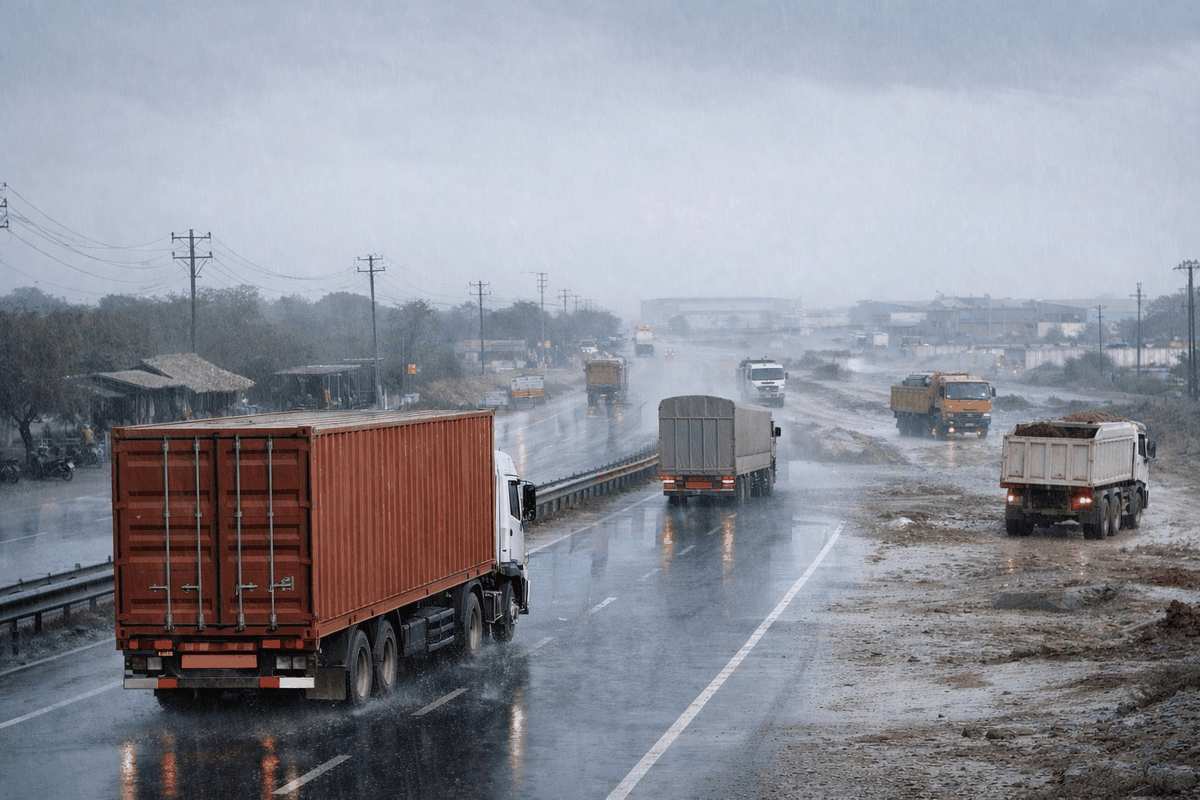
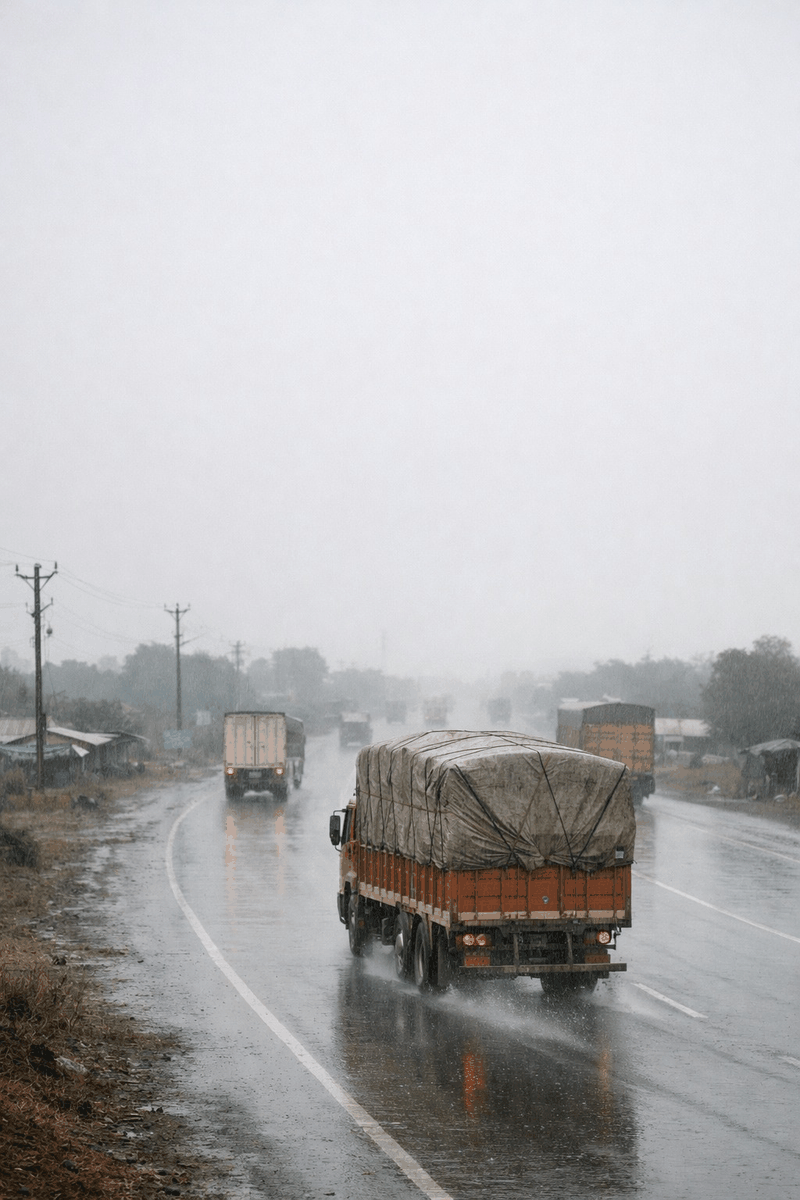
India's commercial vehicle operating environment is genuinely unlike anywhere else in the world. A truck running freight between Ludhiana and Mumbai covers terrain that shifts from Punjab plains to Rajasthan desert to Maharashtra plateau three completely different temperature profiles, road surface qualities, and altitude conditions across a single trip. Summer temperatures in central India regularly exceed 45 degrees Celsius, pushing engine cooling systems, transmission fluid viscosity, and tyre pressure behaviour into ranges that European or American failure models do not account for. The monsoon season introduces road flooding, pothole damage, and humidity-driven electrical corrosion on vehicle wiring harnesses at a scale and frequency that is specific to the subcontinent. A vehicle health model that does not understand Indian seasonality is working with an incomplete picture of what normal actually looks like for a vehicle operating here.
Overloading is perhaps the single most consequential factor that separates Indian fleet health patterns from global benchmarks. Regulatory axle load limits exist, and they are routinely exceeded not always out of negligence but often out of the economic necessity of maximising revenue per trip in a thin-margin business. A vehicle designed to carry 25 tonnes regularly carrying 30 to 32 tonnes experiences suspension fatigue, brake wear, tyre stress, and drivetrain loading that falls entirely outside the manufacturer's maintenance schedule assumptions. Scheduled servicing intervals based on kilometre counts or calendar time were designed for vehicles running within rated parameters. A vehicle that has been overloaded across its operating life has a fundamentally different health trajectory one that only shows up accurately if you are monitoring actual mechanical stress data rather than following a generic service calendar.
Road quality compounds everything. The difference between a vehicle running 500 kilometres on a well-maintained national highway and one running the same distance on a state highway with uneven surfaces, unmarked speed breakers, and stretches of broken tarmac is not just comfort it is vibration load on engine mounts, shock absorber wear, chassis stress, and suspension geometry degradation. These differences do not show up in odometer readings. They show up in the vehicle's health data subtle but consistent patterns in how components respond under load, how quickly wear indicators progress, how thermal profiles shift over time. A fleet health prediction model that is trained on and calibrated for Indian operating conditions reads these patterns correctly. One that is not will either miss them entirely or generate false positives that train operators to ignore alerts which is arguably worse than no alerts at all.
The driver variable is also significantly more pronounced in India than in mature fleet markets. Indian commercial driving involves skills and adaptations that are specific to local conditions navigating unmarked intersections, managing vehicles on roads shared with pedestrians, cyclists, and livestock, handling sudden road surface transitions at highway speeds, and operating in traffic densities that would be considered extreme in most other countries. The driving behaviours that emerge from these conditions place specific stress patterns on vehicles that differ from what European or American driver behaviour models predict. A fleet health platform needs to understand the difference between hard braking that reflects aggressive driving and hard braking that reflects a truck navigating a village market stretch at 2 AM because the maintenance implications are different and the intervention required is different.
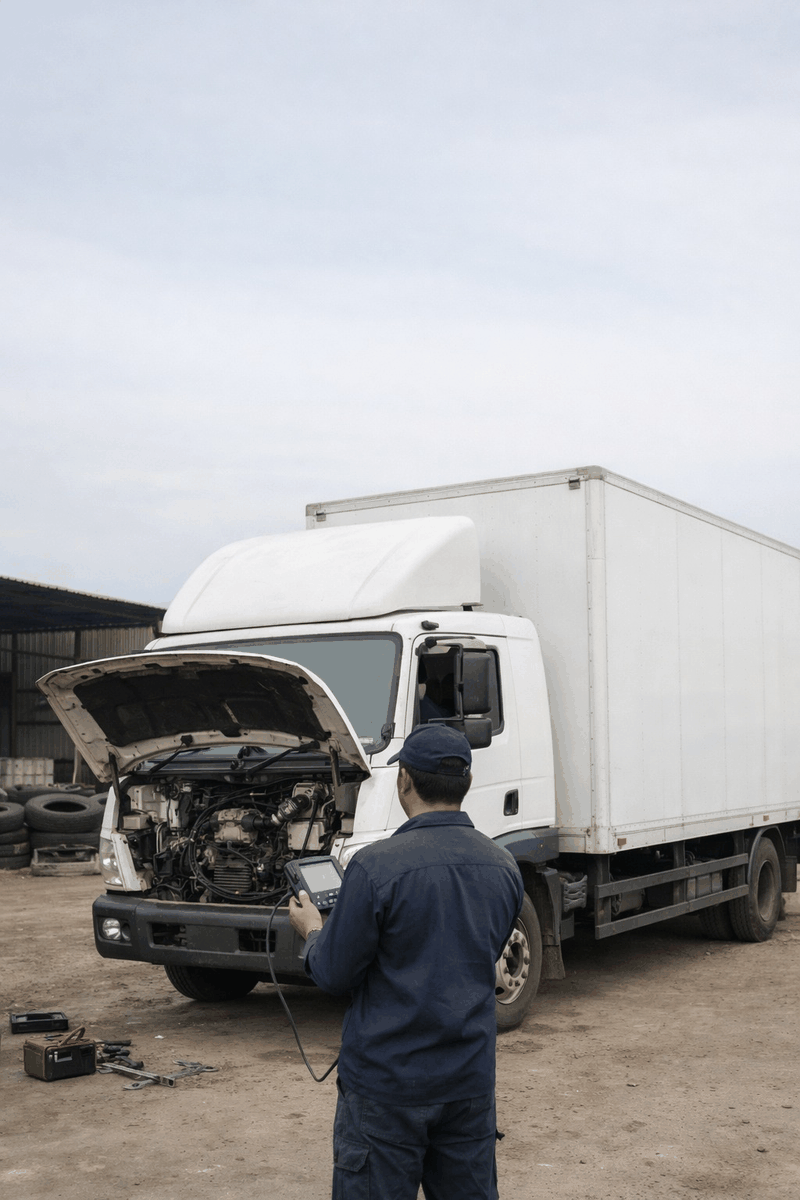
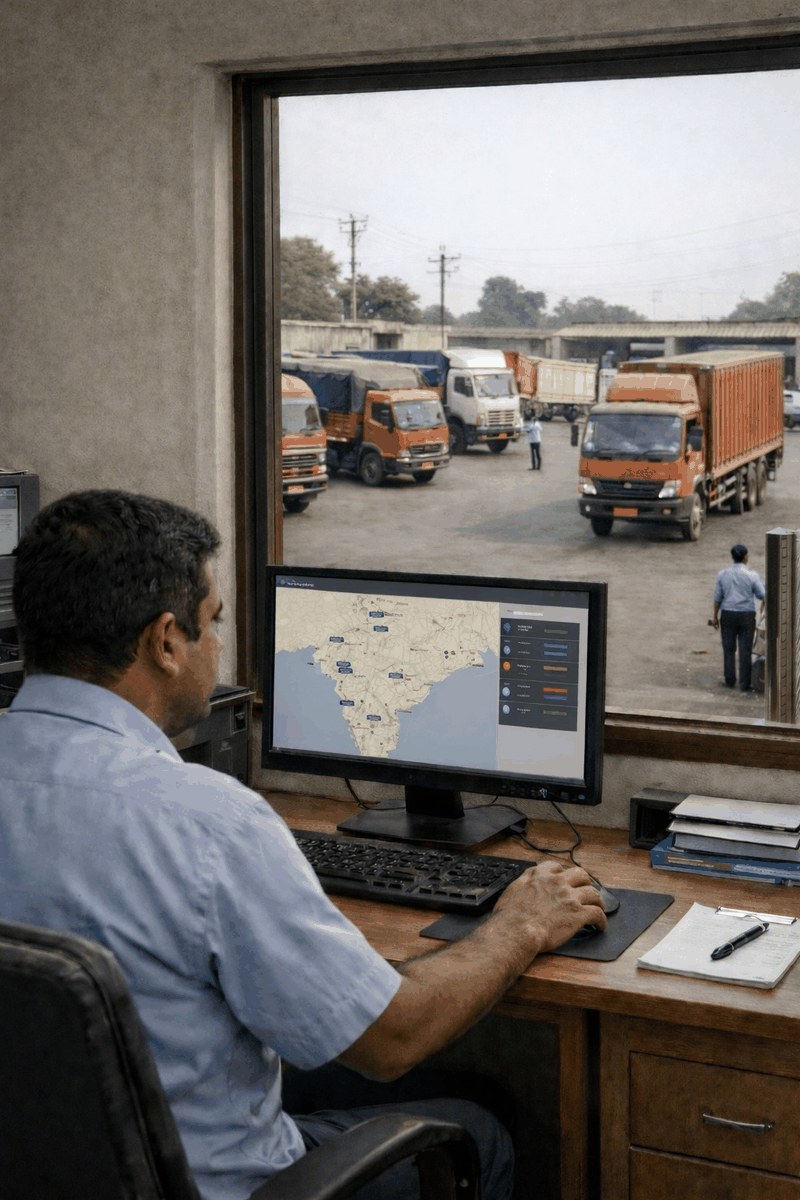
Health-based prediction addresses all of this by shifting the fundamental question from "when is this vehicle due for service?" to "what does this vehicle's actual condition right now tell us about when it needs attention?" A vehicle operating in Rajasthan summer heat, running slightly overloaded, driven by a driver with a hard-acceleration pattern, on a route with significant unpaved sections, will genuinely wear out faster than a comparable vehicle running cooler routes with lighter loads and a smoother driver. Health-based prediction knows this because it is reading the vehicle's actual mechanical and electronic state continuously not inferring it from a kilometre counter. It builds a unique health baseline for each vehicle under its specific operating conditions and flags deviations from that baseline that indicate genuine stress, not just calendar time elapsed.
The commercial case for health-based prediction in India is not abstract. A single unplanned breakdown on a national highway towing costs, workshop charges, cargo delay penalties, driver allowance typically costs a fleet operator between ₹25,000 and ₹80,000 depending on the location and severity. For a fleet of 50 vehicles experiencing two to three such breakdowns per month, that is ₹15 to ₹25 lakh per year in pure reactive maintenance cost, before accounting for the client relationship damage and scheduling disruption that comes with every unplanned vehicle off the road. Health-based prediction does not eliminate breakdowns entirely but reducing them by even 50 to 60 percent, which is a conservative outcome for fleets that implement it properly, represents a material financial impact that justifies the investment many times over.
India's fleet industry is at an inflection point. The vehicles are getting more complex, the operating pressures are not reducing, and the margin for absorbing avoidable costs is shrinking. The fleets that will run most efficiently through the next decade are not the ones with the newest vehicles or the largest workshops they are the ones that know their vehicles best, understand what the data is telling them, and act on it before the road forces their hand. Health-based prediction is not a technology upgrade. It is a fundamental shift in how a fleet operation thinks about its assets from things that break down occasionally to systems that communicate their condition continuously, for anyone paying close enough attention to listen.